Bukele Amends El Salvador's Constitution: Undermining Democracy?
El Salvador, under the charismatic and controversial leadership of President Nayib Bukele, has been a focal point of international attention. While lauded by many Salvadorans for his aggressive crackdown on gang violence and a perceived sense of stability, his administration's legislative actions have consistently raised alarm bells among democracy advocates and human rights organizations globally. A recent and particularly significant development—the amendment to the constitutional reform process itself—has reignited intense debate, prompting many to ask: Does this move by Bukele to alter the constitution fundamentally undermine El Salvador's democratic foundations?
The Shifting Sands of Constitutional Reform
The core of the recent controversy lies in a critical change to how El Salvador's constitution can be amended. Historically, the 1983 Salvadoran Constitution, designed with robustness and stability in mind, mandated a rigorous process for constitutional changes. Any proposed amendment required approval by a simple majority in one legislative assembly, followed by ratification by a two-thirds majority in the *succeeding* legislature. This two-legislature requirement served as a crucial safeguard, ensuring that major constitutional shifts reflected a broad, sustained consensus rather than the fleeting will of a single political cycle. It was a deliberate mechanism to prevent hasty or autocratic amendments, fostering institutional stability.
However, this long-standing mechanism was dismantled in a swift and strategic maneuver. On April 29, 2024, the outgoing Salvadoran legislature, still largely dominated by President Bukele's Nuevas Ideas (NI) party, passed an amendment allowing constitutional changes to be approved by a three-quarters majority within a single legislative session. This decision came just days before the new 60-member legislature took office, where NI secured an overwhelming 54 out of 60 seats. The timing was critical: with such an immense majority, the new legislature, effectively an extension of Bukele's political will, can now easily push through any constitutional reform without the need for subsequent legislative ratification. This move dramatically lowers the barrier for fundamental constitutional changes, significantly concentrating power and raising serious questions about the future of democratic checks and balances in El Salvador.
Concerns Mount: Power Consolidation and Checks and Balances
This alteration to the constitutional amendment process has drawn immediate and fierce criticism from various quarters. Opposition parties, significantly weakened but still vocal, along with numerous human rights organizations, have condemned the amendment as a blatant power grab. Their primary concern is that this change effectively places unprecedented power in President Bukele's hands, enabling his administration to reshape the nation's foundational legal document with minimal internal resistance.
A central fear revolves around presidential term limits. The spectre of an indefinite presidency has long loomed over Bukele's tenure. Despite constitutional prohibitions, Bukele successfully ran for and won re-election in February 2024, a feat facilitated by a controversial Supreme Court ruling issued by magistrates appointed by his party. While that ruling temporarily sidestepped the need for a formal constitutional amendment on term limits, the recent change to the amendment process itself revives and amplifies these concerns. Critics argue that with the ability to alter the constitution unilaterally, Bukele could potentially remove any remaining constitutional limits on consecutive presidential terms, solidifying his long-term leadership. This strategy appears to be a broader effort to entrench Nuevas Ideas' dominance and Bukele's personal authority within the Salvadoran political landscape. For a deeper look into the historical context and trajectory, consider reading El Salvador's Constitutional Shift: Bukele's Path to Power.
Opposition parties like the right-wing Alianza Republicana Nacionalista (Arena) and the left-wing Frente Farabundo Martí para la Liberación Nacional (FMLN), both now reduced to minimal representation, have voiced grave warnings. Arena, for instance, issued a statement highlighting that the amendment would allow vital constitutional reforms to be rushed through with insufficient scrutiny, thereby eroding the very essence of democratic deliberation and oversight. The move, they contend, is a direct assault on the democratic process, designed to centralize decision-making and marginalize dissenting voices.
A Pattern of Legislative Control: Beyond the Constitution
The constitutional amendment is not an isolated incident but rather a significant piece in a larger mosaic of legislative changes and actions undertaken by the Bukele administration to consolidate power. Since taking office in June 2019, President Bukele has overseen a series of reforms and political maneuvers that have progressively strengthened the executive branch and his party's control over other state institutions.
One of the most notable examples of this pattern occurred in 2021, shortly after Nuevas Ideas won an unprecedented two-thirds legislative majority. This majority was swiftly used to remove and replace the magistrates of the Constitutional Chamber of the Supreme Court, as well as the Attorney General. These newly appointed officials subsequently made rulings favorable to Bukele, including the controversial interpretation that allowed him to seek re-election despite constitutional articles designed to prevent consecutive terms. This effectively compromised the judiciary's independence, turning what should be a robust check on executive power into an instrument for its consolidation. The way in which the Legislative Assembly, dominated by official forces, systematically undermined judicial independence is a critical aspect of this power shift.
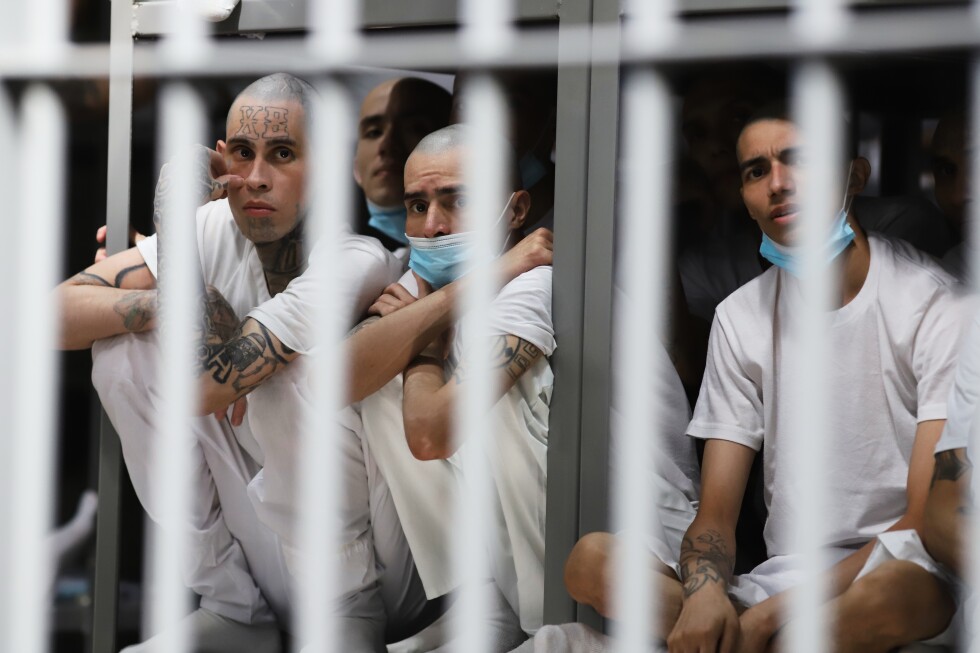
Furthermore, the ongoing "state of emergency," declared to combat gang violence, while popular due to significant reductions in crime rates, has also been criticized for its broad powers, mass arrests, and suspensions of certain civil liberties. While presented as necessary for national security, it further demonstrates the administration's willingness to leverage legislative and executive authority to achieve its objectives, sometimes at the expense of traditional democratic safeguards. For more context on how Bukele's party has utilized its legislative dominance, refer to El Salvador: How Bukele's Reforms Consolidate Legislative Power.
Interestingly, some commentators suggest that international attention, particularly from Western media, has been largely diverted by Bukele's highly publicized "bitcoin experiment," where El Salvador became the first country to make the cryptocurrency legal tender. This focus, some argue, has inadvertently provided cover, allowing Bukele's administration to continue its systematic alterations to the democratic framework with less scrutiny than might otherwise be expected.
What This Means for El Salvador's Future and Democracy
The implications of Bukele's decision to alter the constitution are profound and far-reaching for El Salvador's democratic future. By simplifying the constitutional amendment process, the administration has significantly reduced the institutional safeguards against arbitrary rule. This creates an environment where fundamental laws can be changed based on the will of a single, dominant political party, potentially leading to:
- Reduced Democratic Scrutiny: Hasty constitutional reforms can bypass thorough public debate and expert analysis, weakening the democratic discourse.
- Increased Executive Power: The presidency gains immense power with fewer institutional restraints, potentially leading to an erosion of the separation of powers.
- Erosion of the Rule of Law: When the foundational document of a nation can be easily reshaped for political expediency, it undermines the very principles of constitutionalism and predictable governance.
- Uncertainty for Future Reforms: The lowered barrier means future changes, whether to the electoral system, human rights protections, or other critical areas, could be enacted without the broad, sustained consensus previously required.
While President Bukele's popularity remains exceptionally high, largely due to his perceived success in improving public safety, it is crucial to distinguish between popular support and adherence to democratic norms. True democratic health relies not just on the will of the majority, but also on robust independent institutions—a strong judiciary, an independent legislature, and respect for constitutional limits—that can provide checks on executive power and protect minority rights. The swiftness and method by which Bukele alters the constitution suggest a path that prioritizes immediate political objectives over the long-term institutional stability and democratic integrity that the original 1983 framework sought to enshrine.
In conclusion, the amendment to El Salvador's constitutional reform process marks a critical juncture. While supporters may view it as an efficient way to implement necessary reforms and consolidate the "Nuevas Ideas" project, critics see it as a dangerous step towards authoritarianism, dismantling vital democratic checks and balances. The ease with which Bukele alters the constitution raises legitimate concerns about whether El Salvador is progressively moving away from a pluralistic, multi-party democracy towards a system where power is increasingly centralized in the hands of one leader and one party, with potentially significant implications for human rights and the rule of law in the years to come.